

Automotive engineering and product development consulting
Automotive components must meet strict targets, delivering predictable performance under harsh conditions, while scaling to millions of units.
We deliver end-to-end automotive engineering that accelerates development from concept to production-ready systems, optimising performance and robustness through our Robust Design ecosystem and tools.
Our expertise supports automotive engineering teams that need predictable system behaviour, faster validation, and seamless integration into existing manufacturing processes.
We work with the best companies




RD8 Design Assessment for automotive
RD8 offer 3 tiers of product reviews.
The tiers are based on different details levels and levels of mitigating actions/design suggestions.
Get in touch - let's explore the potentials in your CAD file
What is mechanical engineering consulting for automotive systems?
In practice, this means defining system kinematics and load paths, controlling tolerances and interfaces, and validating performance under realistic manufacturing variation. The focus is on exposing risks early, reducing redesign loops, and ensuring durability, functional performance, assembly feasibility, and cost targets are met together.
The challenges we address are familiar in automotive programmes: long development cycles, late discoveries, overconstrained designs, and excessive rework. By linking design decisions directly to functional behaviour and production reality, we shorten development time and keep cost and timing under control.
What sets us apart from generic mechanical engineers is our Robust Design, system level approach and production focused mindset. Instead of optimising individual parts, we engineer complete automotive systems that are robust, scalable, withstand real road environments, and are ready for high volume manufacturing.
Automotive System Engineering and Development
Automotive System Engineering and Development is the structured execution of mechanical engineering across complete vehicle systems, ensuring that function, performance, durability, and manufacturability are designed in from the start.
In practice, it involves defining clear system architectures, interfaces, load paths, and requirements, then translating them into robust, production-ready designs using data-driven methods, thereby minimizing risk in production and use.

Robust Design, Variation Control, and Cost Efficiency
RD8 focuses on making automotive systems insensitive to manufacturing variation while meeting performance and durability targets at scale. This involves early tolerance allocation, clear kinematics, and structural assessment of interfaces and load paths, so critical functions remain stable across millions of units.
By embedding robustness into the design rather than relying on late fixes, engineering risk is reduced, production yield improves, and total cost is lowered without compromising vehicle performance.
Concept-to-High-Volume Production Support
Concept-to-Production Development Support ensures automotive systems are engineered with a clear path from early concepts to stable, high-volume manufacturing.
What this means in practice is, that it connects requirements, design decisions, validation, and production constraints into a single, structured engineering flow.
This reduces late changes, and ensures that performance, time, and cost targets are met consistently when designs move from prototype to series production.

What types of automotive systems does rd8 support?
Interior Modules
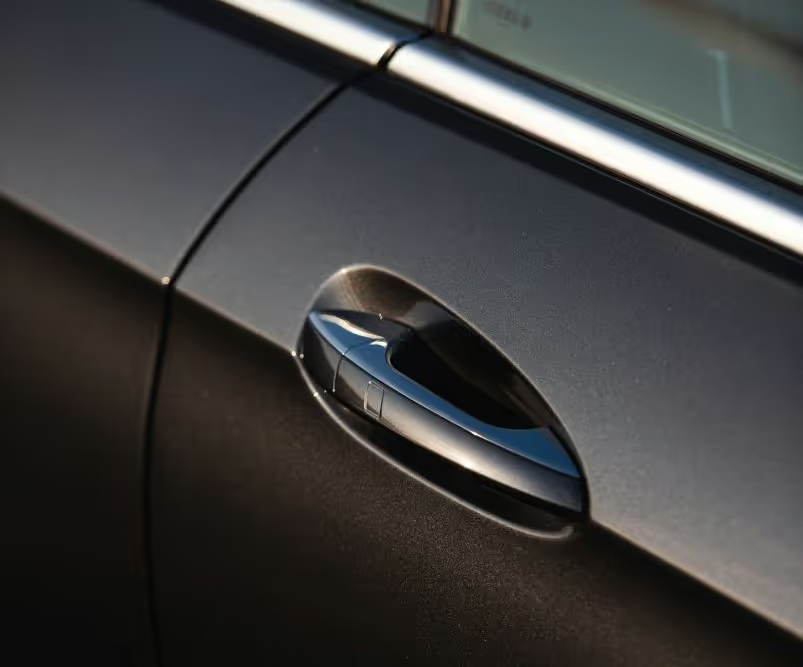
Interior modules combine multi-material structures, tight kinematics and visible interfaces where perceived quality is critical. They rely on precise constraint design and controlled tolerance stacks to avoid noise, rattle and inconsistent feel.
Development is challenged by high sensitivity to variation, complex assembly sequences and conflicting requirements between cost, aesthetics and robustness.
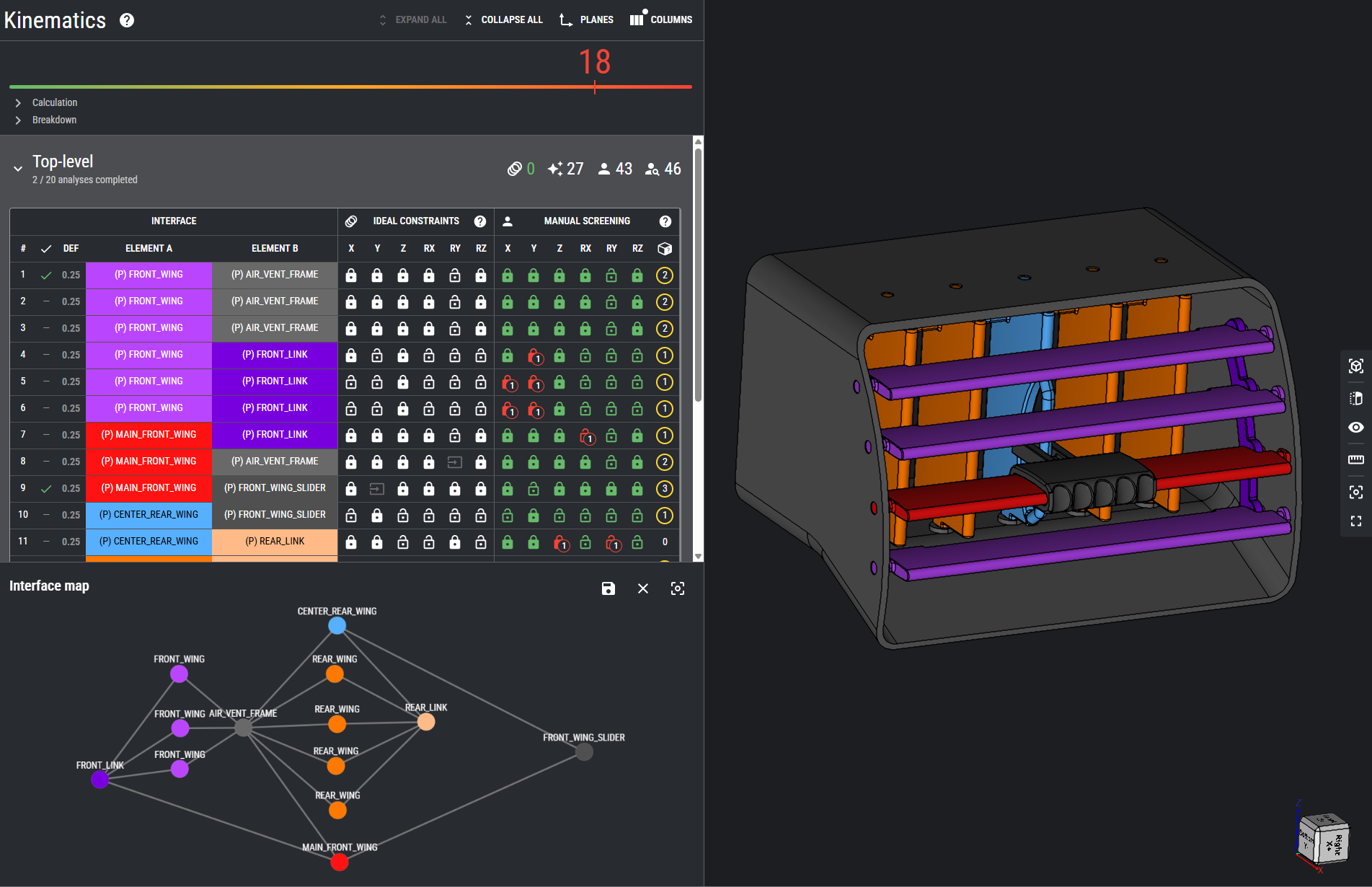
RD8 supports interior modules through kinematic analysis, interface optimization and tolerance optimisation, leading to predictable behaviour and first-time-right designs ready for high-volume production.

Chassis, Structural, and Load-Bearing Systems
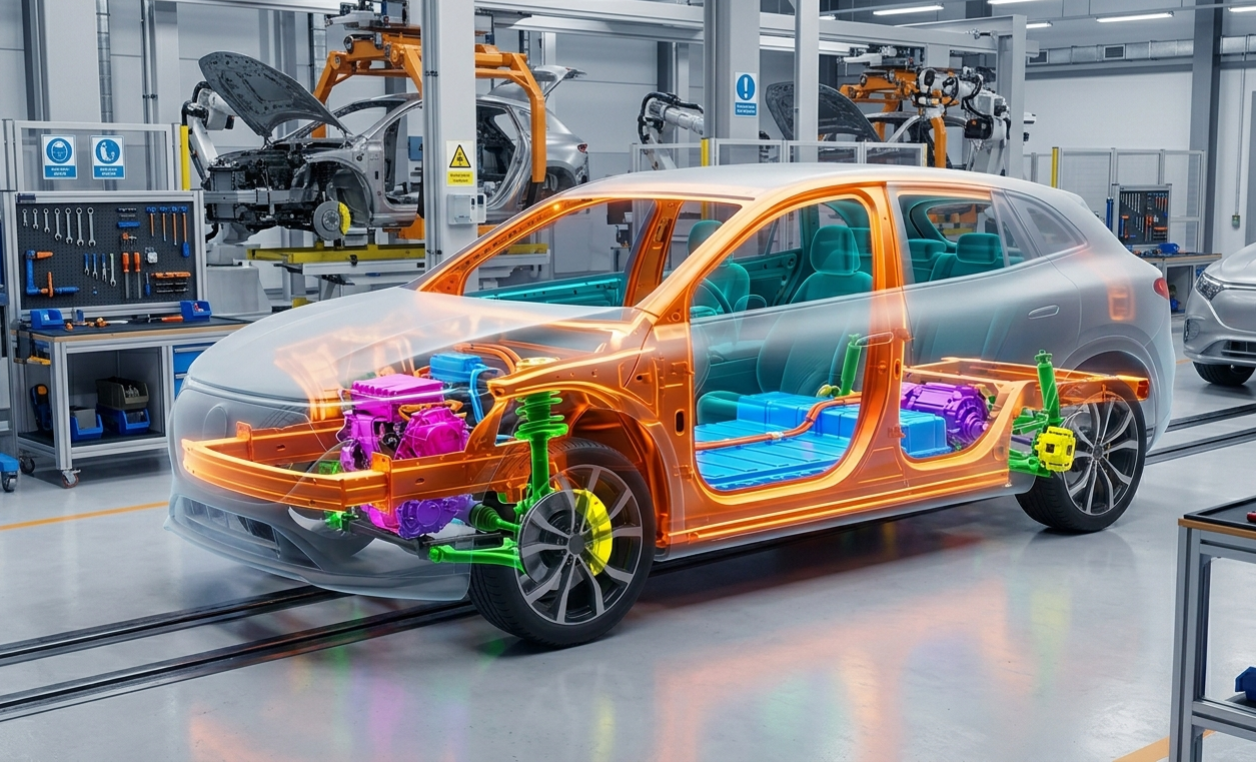
Chassis and load-bearing systems define the vehicle’s structural backbone, carrying static and dynamic loads while ensuring stiffness, durability and crash performance. They are characterised by complex load paths, multi-axial stresses and tight interfaces between welded, bolted or cast components. A strong coupling exists between manufacturing processes and tolerances.
Development is challenged by competing targets for weight reduction, cost, structural integrity and manufacturability. Small deviations can lead to stress concentrations, misalignment or unpredictable system behaviour.
RD8 supports chassis and structural system development through Robust Design principles, focusing on kinematic architecture and interface definition, always maintaining tolerance optimization as a key ingredient of the product development.
This enables predictable load transfer, reduces overconstraints and creates designs that meet performance targets while remaining robust and production-ready at scale.
Mechatronic Systems for Autonomous and Safety-critical Applications
Mechatronic systems integrate precision mechanics with actuators and sensors, where interfaces, kinematics and tolerances directly impact car and passenger safety. They are characterised by tight coupling between mechanical architecture and control performance, minimal tolerance for variation, and strict lifetime requirements.
The development is challenging due to high sensitivity to geometric variation, reduced historical knowledge and very limited margin for late changes. Even small deviations can degrade system response or compromise function.
RD8 supports safety‑critical mechatronic systems by supplementing the SME knowledge with Robust Design principles, focusing on interfaces, kinematics and tolerance allocation. By eliminating overconstraints and reducing sensitivity early, RD8 enables predictable behaviour, fewer design iterations and robust, must‑not‑fail solutions suitable for autonomous driving at Level 3 or higher.

Propulsion and engine modules
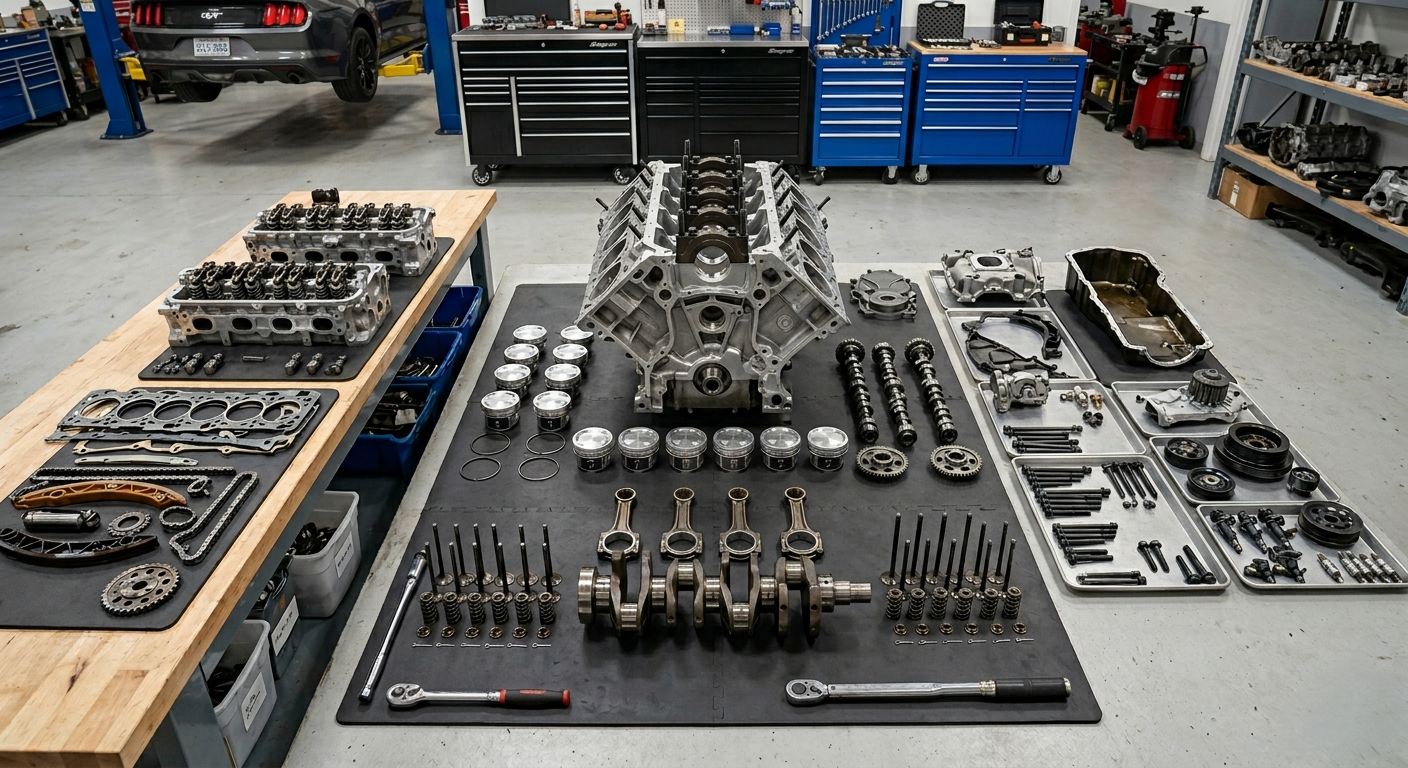
Propulsion and engine modules are dependent on complex load paths, rotating components, thermal effects and tight mechanical interfaces where efficiency, durability and NVH are critical. They combine high structural demands with sensitivity to assembly order and material behaviour under load and temperature.
Competing targets for performance, weight, cost and lifetime make development challenging, while small geometric deviations can lead to vibration, wear or reduced efficiency.
RD8 supports propulsion and engine modules through Robust Design principles, focusing on kinematic architecture, interface clarity and tolerance optimisation. This reduces sensitivity to variation, improves predictability and enables robust, production‑ready designs for high‑performance applications.
RD8 supports automotive engineering teams throughout the complete design process
RD8 supports automotive product development across all stages by ensuring performance, durability, cost efficiency, and manufacturability from early concept through design, validation, and high-volume production.
1. Concept and System Architecture Development
2. Prototype Development and Early Validation
3. Design Maturation and Robustness Validation
4. Production Readiness and Scale-Up
What Engineering Approach Does RD8 Use for Automotive Product Development?
What results has RD8 delivered in Automotive engineering?
Ventilation Unit
Reinventing the Oil Pump
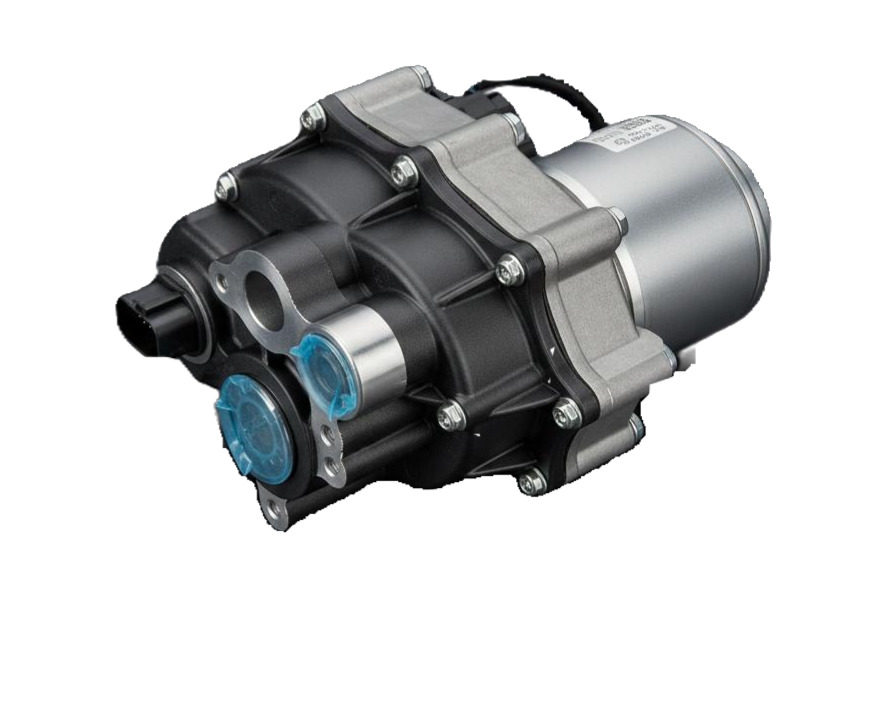
Steer-by-Wire Steering Gear
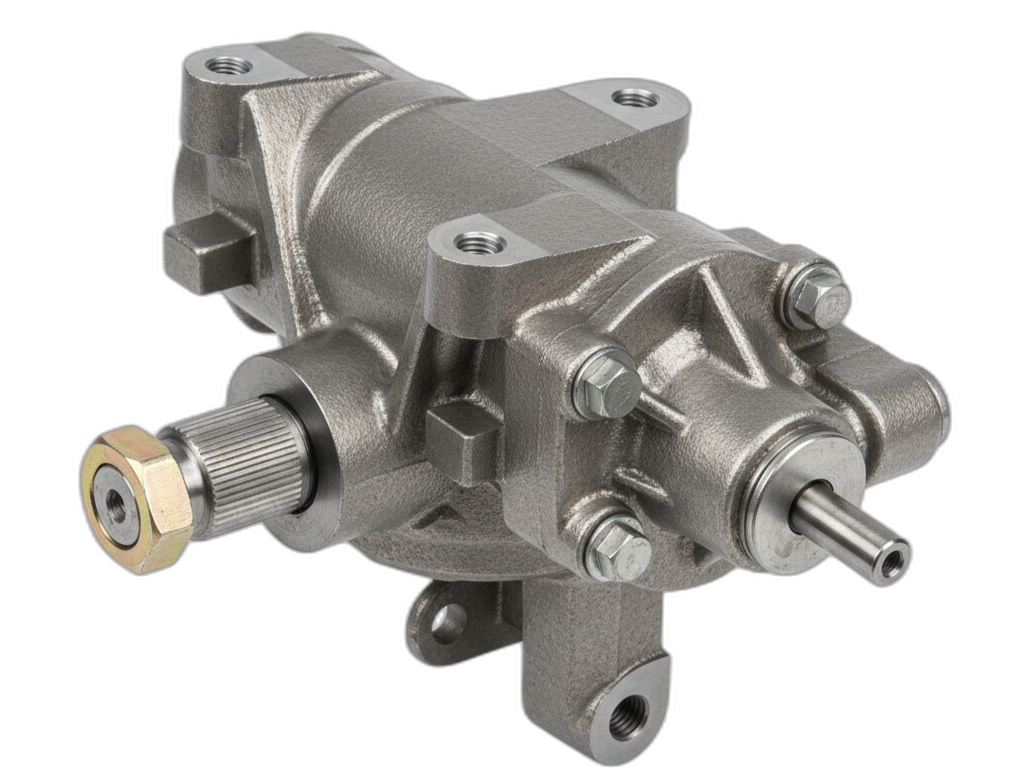
What Outcomes Does Automotive Engineering Consulting Help Achieve?
What Mechanical Engineering Expertise Does RD8 Bring to Automotive Development?
RD8 applies advanced mechanical engineering expertise to automotive products and modules, enabling reliable and predictable performance, minimized risk, and scalable manufacturability through systematic, data‑driven development
System Architecture and Interface Design Expertise
Tolerance, Sensitivity, and Variation Analysis Expertise
Assembly, Constraints, and Structural Engineering Expertise
Robustness and Reliability Engineering Expertise
Who Works With RD8 for Automotive Engineering and Product Development Consulting?
RD8 works with organisations across the complete value chain with Robust Design–driven engineering to improve product reliability, reduce development risk, and enable scalable, high‑volume production.
Automotive OEMs
Tier 1 and Tier 2 Automotive Suppliers
Electrification and Mobility Technology Companies
Engineering and Product Development Teams
How do teams work with rd8?
Why do teams work with rd8?
How Can You Start an Automotive Engineering Project?
1. Architecture and Design Assessment
2. Engineering Co-Development Engagement

3. Long-Term Product Development Partnership

How can RD8 support your Robust Design journey?
We integrate into your development process - combining software, consulting, and academy training. From early concept to production, RD8 ensures robust, cost-efficient designs and empowers your team with the tools and knowledge to sustain excellence.

Engineering Intelligence

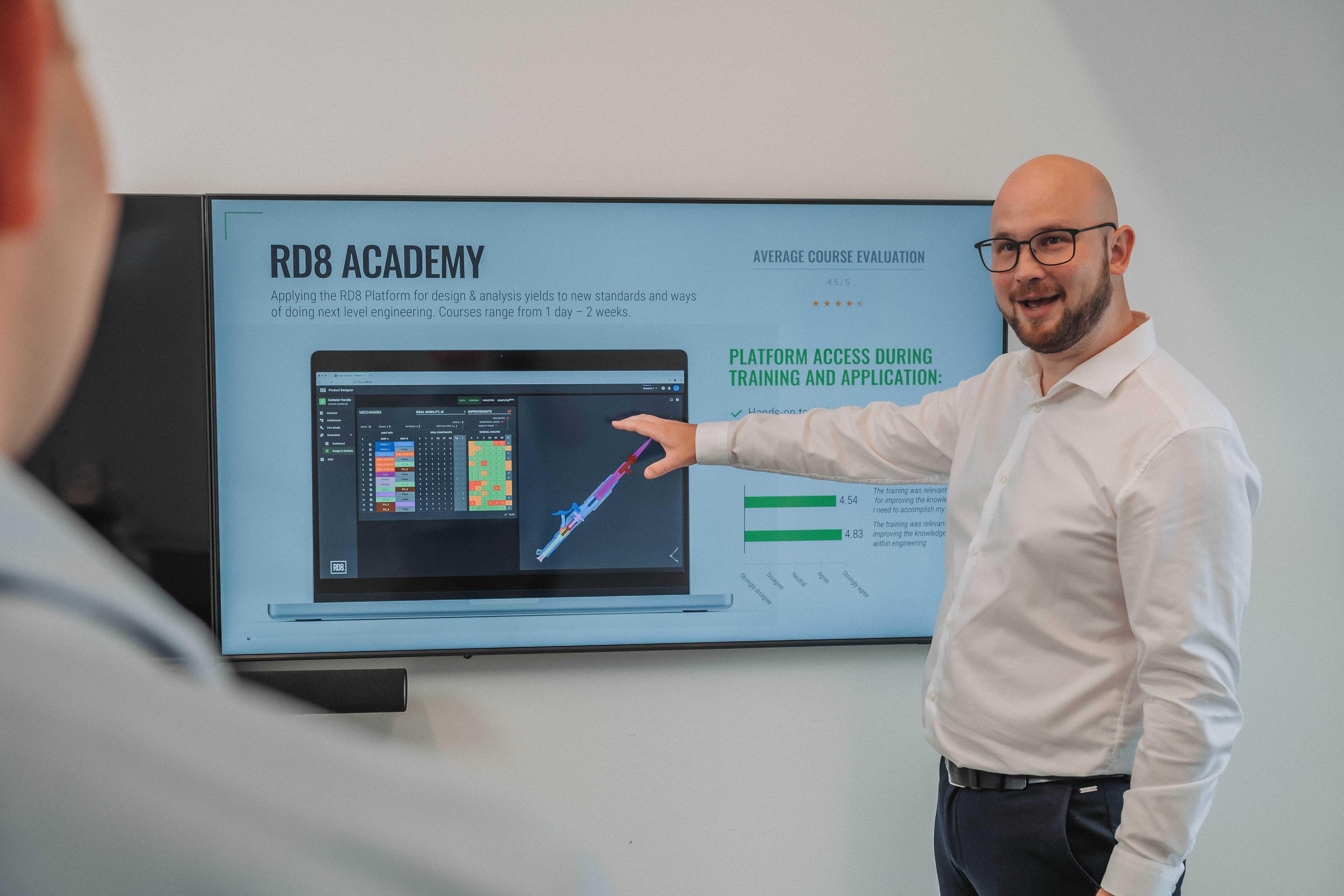
Get in touch with our experts
Let's share viewpoints on next-level design.
Want to know more about:
Shoot us a message and we will get back as soon as possible.


By submitting, you accept RD8's Privacy Policy and Terms of Service.