Critical-to-Quality: from user need to inspection dimension
Getting the link right from user need, all the way down to the critical dimension/tolerance on the drawing to be able to guarantee quality.
The journey is long.

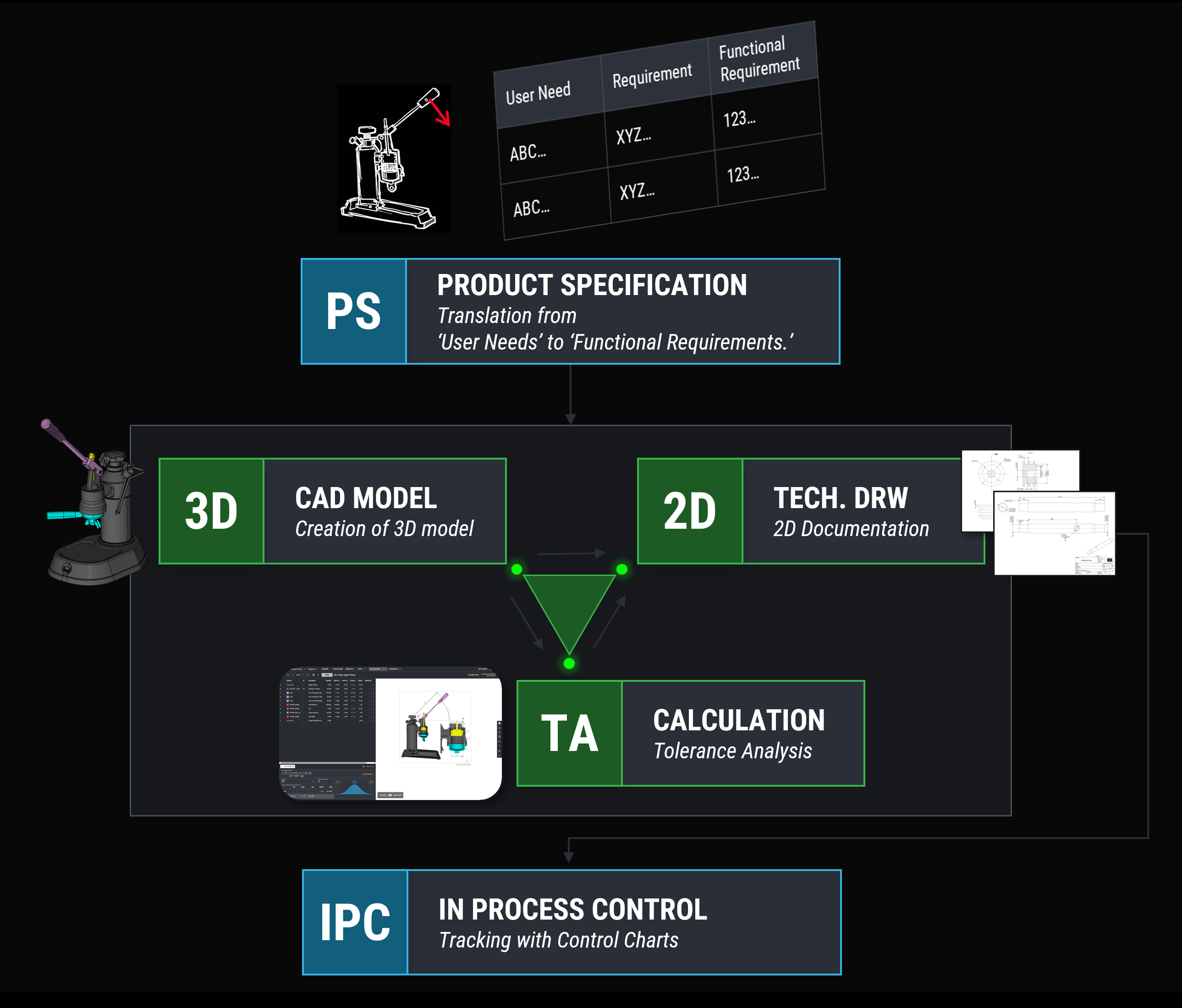
Breakdown of User Needs to Clear Functional Requirements
R&D units struggle with the missing link of being able to predict the quality based on the design documentation.
Not only prediction of quality - but also the capability of being able to monitor and check the critical dimensions to keep quality in control is a missing part in most mechanical departments.
It all starts with a clear breakdown of requirements.
User Needs --> Requirements --> Functional Requirements (a functional specification that can be stated in physical units).
Alignment between product owners, project managers, chief engineers, mechanical engineers,...

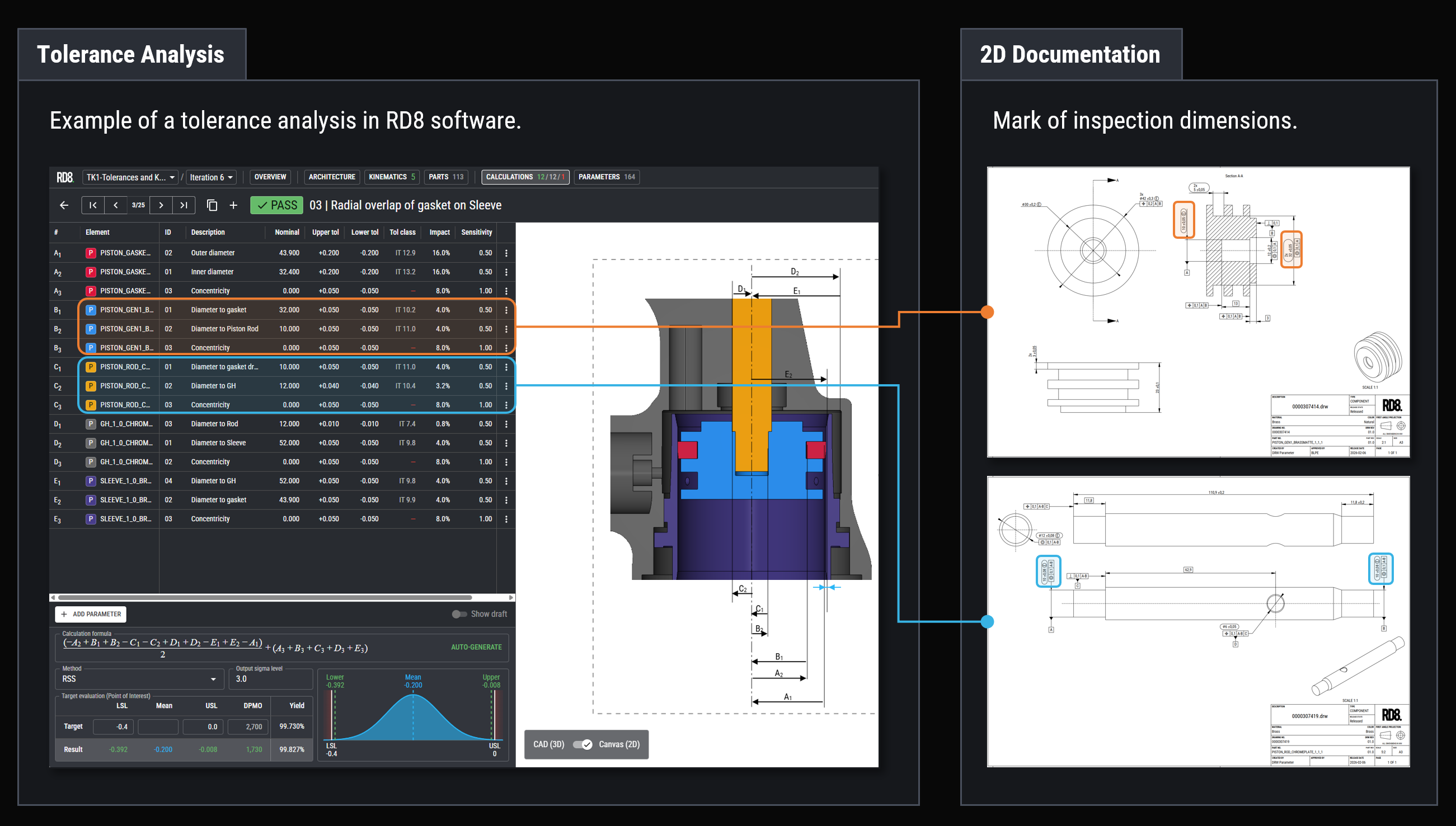
Trace the dimensions critical to quality
Most drawings are full of dimensions, tolerances, notes - but which are the critical ones?
Too complex to determine the critical dimensions
R&D units struggle with the missing link of being able to predict the quality based on the design documentation.
Not only prediction of quality - but also the capability of being able to monitor and check the critical dimensions to keep quality in control is a missing part in most mechanical departments.
First.
Using Robust Design principles and RD8 Software to eliminate overconstraints enables predictability and design clarity. Know the minimum amount of dimensions needed to satisfy a function is determined.
Second.
RD8 Software maps out the critical dimensions in functional calculations and tolerance stack-ups.
The parameter list feature highlights important dimensions for each part so they can be easily transferred to the 2D drawings.
Part dimensions can be filtered and checked in the system to ensure correct annotation on the adjacent 2D drawing for the given part.
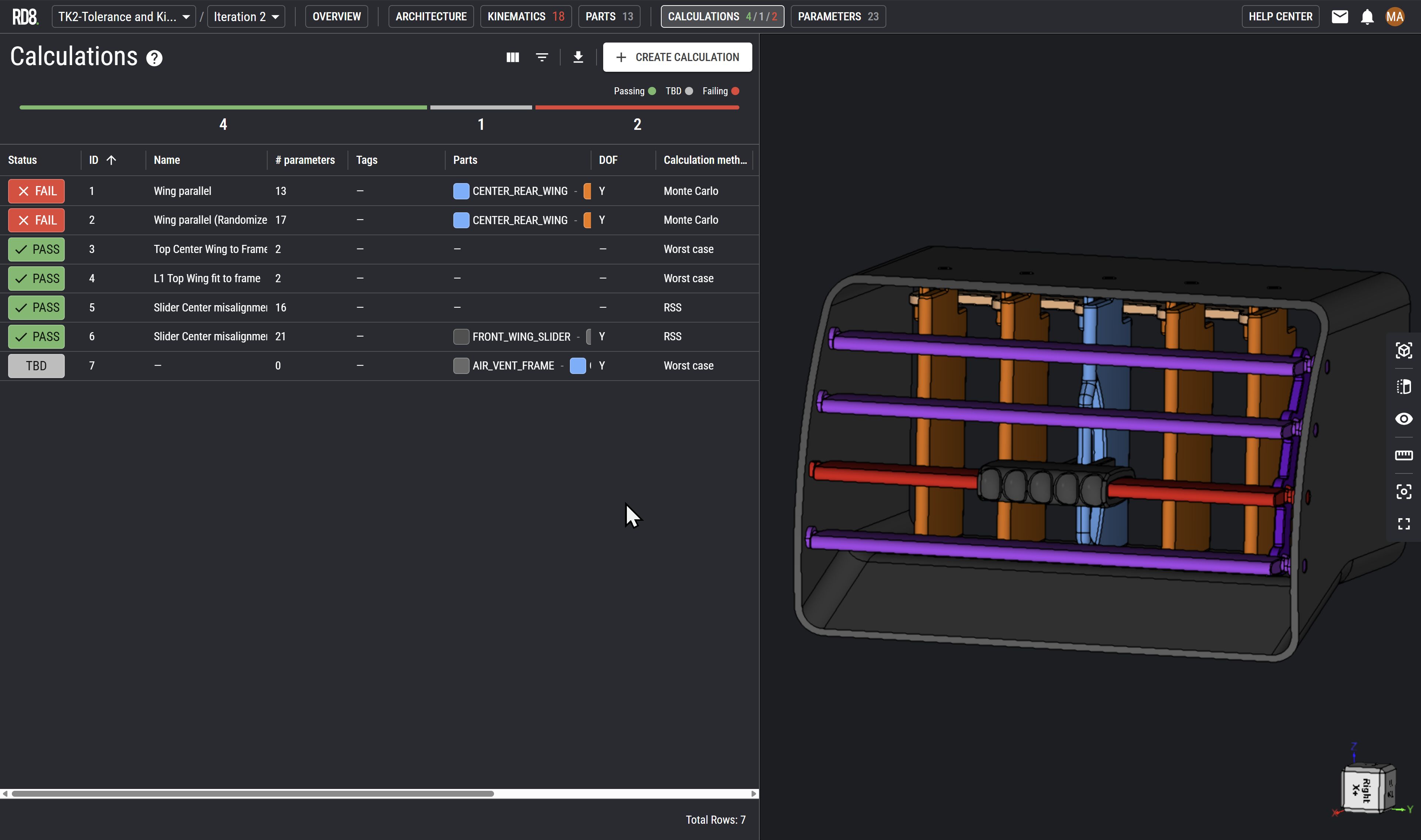
Calculations Does Not Match Reality
Often, simulations and calculations does not align with tests. Why? This frustration often leads to a culture where mechanical engineers don't calculate - but just seek out to test and experiment. In some cases an effective mean - in some it can be a very deceiving mean - as a working prototype being seen as a grant for production readiness.
If a tolerance stack is ambiguous or not. In order to achieve a 1:1 correlations between simulation and output the tolerance stack should be based on crystal clear tolerance paths - and hence not be ambiguous.
Get in touch with our experts
Let's share viewpoints on next level design quality.
Shoot us a message and we will get back as soon as possible.


By submitting, you accept RD8's Privacy Policy and Terms of Service.
