

Medical device engineering and product development consulting
RD8 delivers innovative, compliant, and market‑ready medical device solutions for medtech startups, OEMs, and healthcare innovators, through deep mechanical engineering expertise across the full product lifecycle.
We deliver premium consulting in device development and R&D execution from early concept and system architecture to design, verification, validation, and manufacturing transfer, RD8 helps ensure reliable performance, regulatory alignment, and readiness for scalable production.
Direct definitive answer
Provide a concise, high-impact hero introduction focused on end-to-end medical device engineering capabilities, regulatory alignment, and commercialization readiness.
Emphasize expertise across the full product lifecycle, from concept through design, verification, validation, and manufacturing transfer.
- Clearly define what is delivered (e.g., "innovative, compliant, and market-ready medical devices") and for whom (e.g., "medtech startups, OEMs, and healthcare innovators").
Maximum 2 sentences.

What types of Medical devices does rd8 support?
Exact definitive answer
RD8 supports a wide range of medical devices, including "electromechanical devices, handheld diagnostic devices, surgical instruments, wearable medical devices, implantable systems (non-active mechanical components), and custom medical device platforms".
Note: Please skip any type of devices that are not relevant.
Surgical Instruments
Surgical instruments are medical devices designed to support manual or assisted procedures by enabling precise manipulation, cutting, grasping, or positioning of tissue within clinical environments. They rely on direct user interaction, often under demanding conditions, where ergonomics, tactile feedback, and control are critical to procedural accuracy and patient safety.
From an engineering perspective, surgical instruments are characterised by precise mechanical interfaces, material selection for strength and biocompatibility, and geometries optimised for specific clinical tasks. Development challenges include ensuring durability under repeated sterilisation, maintaining mechanical precision over time, and balancing functional performance with manufacturability and cost.
RD8 supports surgical instrument development through mechanical design, material and interface definition, and robustness evaluation, helping teams deliver reliable, high quality instruments suited for consistent clinical performance and scalable production.
Handheld diagnostic devices
Handheld diagnostic devices are portable medical tools designed to support rapid assessment, measurement, or screening in clinical and patient use environments. They enable direct user interaction through compact, ergonomic formats, where ease of use, accuracy, and repeatability are essential for reliable clinical decision making.
From an engineering perspective, these devices require precise mechanical integration of sensing elements, housing structures, and user interfaces within constrained geometries. Development challenges include tolerance control, environmental robustness, durability under repeated use, and ensuring consistent measurement performance across varying conditions.
RD8 supports handheld diagnostic device development through mechanical design, interface definition, and variation management, helping teams achieve reliable performance, usability, and manufacturability in both low volume and high volume production contexts.
Electromechanical and Mechatronic Medical Systems
Electromechanical devices are medical systems that combine mechanical components with electrical actuation and control to perform critical functions such as fluid delivery, motion control, or automated therapeutic actions.
They are widely used in both clinical and patient‑use environments, where reliable interaction between mechanical systems, electronics, and user interfaces is essential for safe and effective operation.
From an engineering perspective, electromechanical devices are characterised by tightly integrated mechanical architectures, actuator systems, and interface definitions that must function consistently under varying load cases, environmental conditions, and use scenarios.
Development challenges include managing mechanical‑electrical interfaces, ensuring stable force and motion control, controlling tolerance and variation across subsystems, and achieving robustness and reliability in systems that often include both reusable and high‑volume disposable components.
RD8 supports electromechanical device development through system architecture definition, mechanism and interface engineering, and structured analysis of tolerances, sensitivities, and failure modes. By applying a data‑driven, risk‑based approach, RD8 helps development teams manage system complexity and deliver electromechanical solutions with predictable performance, regulatory alignment, and readiness for production scale.
Exact definitive answer
Define X as a category of medical device supported by RD8, focusing on its functional purpose, user interaction, and role within clinical or patient-use environments.
What are the key mechanical and engineering characteristics of X?
What challenges does X present in development?
How does RD8 support X (high-level)?
Wearable and portable medical devices
Wearable and portable devices are medical systems designed to support monitoring, therapy, or diagnostic functions either on the body or in close proximity to the patient across clinical and home‑use environments. They require intuitive user interaction and reliable operation over extended periods, often outside controlled settings.
From an engineering perspective, these devices combine compact mechanical architectures with attachment or handling solutions, requiring robust integration of components under movement, environmental exposure, and repeated use. Development challenges include ensuring stable performance under varying conditions, managing power and packaging constraints, and achieving durability while maintaining comfort and usability.
RD8 supports wearable and portable device development through system‑level design, interface definition, and robustness engineering, helping teams achieve reliable performance, user‑centred design, and manufacturability across production scales.
Exact definitive answer
Define X as a category of medical device supported by RD8, focusing on its functional purpose, user interaction, and role within clinical or patient-use environments.
What are the key mechanical and engineering characteristics of X?
What challenges does X present in development?
How does RD8 support X (high-level)?
Custom medical device platforms
Custom medical device platforms are purpose‑built solutions designed to support multiple configurations, variants, or use cases within a shared architectural framework. They enable adaptation of device functionality, interfaces, or performance characteristics to different treatments, diagnostic applications, or user needs, while maintaining a common technical foundation.
From an engineering perspective, these platforms are characterised by flexible system architectures, modular interfaces, and clear separation of configurable and fixed elements. Development challenges include managing variability across configurations, maintaining performance consistency, and ensuring that adaptability does not introduce additional risk in terms of reliability, regulatory compliance, or manufacturability.
RD8 supports custom medical device platforms through architecture definition, modular interface design, and structured variation and risk management, helping teams develop scalable platform solutions that enable efficient product variants while ensuring reliable performance and readiness for production.
Exact definitive answer
Define X as a category of medical device supported by RD8, focusing on its functional purpose, user interaction, and role within clinical or patient-use environments.
What are the key mechanical and engineering characteristics of X?
What challenges does X present in development?
How does RD8 support X (high-level)?
What Engineering Approach Does RD8 Use for Medical device Development?
Exact definitive answer
Provide one sentence that defines RD8’s engineering approach as a structured, principles-driven methodology focused on achieving reliable, manufacturable, and high-performance X.
How Does Mechanical Engineering Support Each Stage of Medical Device Device Development?
Medical device development progresses through defined stages, where decisions made early in the process directly influence downstream performance, risk, and manufacturability.
Mechanical engineering provides the technical structure that links user needs and system requirements to detailed design, verification, and production‑ready solutions.
RD8 applies mechanical engineering in a stage‑appropriate manner, ensuring that each development phase builds logically on the previous one, reduces uncertainty, and enables controlled progression towards clinically and industrially robust device outcomes
1 sætning omhandlende:
Exact definitive answer
Mechanical engineering supports medical device development across all stages by "ensuring performance, reliability, safety, and manufacturability from early concept through design, validation, and full-scale production".
1. Concept and System Architecture Definition
2. Prototype Development and Iteration
3. Design Maturation and Verification Preparation
4. Production Readiness and Scale-Up
We work with the best companies


What is mechanical engineering and product development consulting for medical devices
Medical device development demands reliable, high‑performance solutions that can scale to production while maintaining traceability of design decisions and alignment with regulatory expectations, including risk‑based development principles such as ISO 14971. This requires system engineering driven into functional architectures, design processes that support risk management, and a structured, data‑driven approach to solution development and design maturation.
RD8’s Engineering Ecosystem and design framework support development teams in applying these principles in practice, enabling faster progression, improved design quality, and reduced technical risk. We work with you from early concept through industrialisation and ramp‑up, delivering with your team to solve challenges in performance output and consistency, regulatory alignment, and readiness for scalable production.
Exact definitive answer
Provide a clear, concise definition of "mechanical engineering and product development consulting for medical devices" within the context of regulated healthcare product design and commercialization.
What does X include in practice?
What problems does it solve?
What makes it different from general mechanical engineering?
Robust Design, Tolerance Control, and System Performance
Robust design, tolerance control, and system performance engineering form a core part of mechanical engineering consulting for medical devices, focusing on structured methods to ensure that device function remains stable and predictable despite real‑world variation.
In practice, this involves defining system architectures and interfaces, performing tolerance and sensitivity analyses, and applying data‑driven design and verification methods to optimise how components interact and perform together.
These activities directly support device performance and risk reduction by identifying critical parameters, controlling variation, and eliminating sources of failure before they emerge in testing or production.
By aligning design decisions with manufacturing capabilities and validation requirements, robust design connects early engineering choices to consistent real‑world performance, regulatory compliance, and reliable production outcomes across the product lifecycle
Concept-to-Production Development Support
We offer services from early stage concept development to industrialisation and ramp-up. Either working side-by-side in co-development or delivering work packages where you need it.
Sometimes, risk transparency and momentum can be created through a Design Assessment driven off our Engineering Ecosystem and metrics.
Our SMEs are here to help you tackle your challenges in device design
What mechanical engineering services are provided for Medical Devices?
RD8 provides structured mechanical engineering services covering system architecture, mechanism design, tolerance and variation management, robustness and reliability engineering, and design for manufacturability, applied from early concept through detailed design and preparation for scalable production.
These services are delivered through a systematic, data‑driven approach to support informed technical decision‑making, reduce design complexity, and ensure predictable performance and regulatory alignment across development stages
Exact definitive answer
What does X include in practice? (concise summary)
Device Architecture Development
Mechanism and Structural Engineering
Tolerance and Variation Management
Robustness and Reliability Engineering
Failure Mode and Root-Cause Analysis
Design for Manufacturability (DFM)
What Outcomes Does medical device engineering consulting help achieve?
Exact definitive answer
Provide one sentence that defines the key outcomes of engineering consulting for X, emphasizing improved performance, reduced risk, and readiness for scalable production.
What mechanical engineering expertise does rd8 bring to Medical Device development?
RD8 applies advanced mechanical engineering expertise to solve complex challenges in medical devices, enabling reliable performance, controlled risk, and scalable, high‑performance solutions across the full product lifecycle.
Exact definitive answer
Provide one sentence that defines RD8’s expertise as a combination of deep mechanical engineering capabilities applied to X, enabling reliable, scalable, and high-performance medical device development.
System Architecture and Interface Design Expertise
Tolerance, Sensitivity, and Variation Analysis Expertise
Assembly, Constraints, and Structural Design Expertise
Robustness and Reliability Engineering Expertise
who works with rd8 for medical device engineering and product development consulting
RD8 works with organisations developing complex medical devices where mechanical engineering directly determines performance, reliability, and manufacturability at production scale.
Engagement is typically driven by must‑not‑fail applications or timelines requiring structured, advanced engineering support.
Medical Device Manufacturers
MedTech R&D and Innovation Teams
Pharmaceutical and Combination Product Teams
Engineering and Product Development Organizations
How do teams work with rd8?
Why do teams work with rd8?
How can you start a Medical device engineering project?
1. Architecture and Design Assessment

2. Co-Development Support
3. Long-Term Engineering Partnership
Frequently asked questions about medical device engineering and development consulting
Below you will find frequently asked questions about Medical Device engineering and Development Consulting. If you have any further questions about how RD8 can assist in your design process, please reach out to us.
How Does Mechanical Engineering Improve Medical Device Performance and Reliability?
Mechanical engineering improves medical device performance by designing and optimising device architecture, mechanisms, and interfaces so critical functions—such as measurement accuracy, actuation, and user interaction—remain predictable under real‑world variation. In medical device development, tolerance engineering, sensitivity analysis, and verification‑driven design reduce performance drift caused by manufacturing variation, friction, wear, and environmental conditions, enabling reliable, compliant, and production‑ready device performance at scale.
What Engineering Challenges Are Common in Medical Device Development?
This is highly application specific. however, medical device development is characterised by the need to balance mechanical performance, usability, manufacturability, and regulatory compliance within a highly controlled design and verification framework. Common engineering challenges include managing tolerance and variation effects, ensuring reliable behaviour across use conditions, integrating complex interfaces within constrained architectures, and maintaining traceability and evidence for regulatory approval.
These challenges are often amplified during verification, scale‑up, and production, where small sensitivities or unaccounted interactions can lead to performance drift, new failure modes, or manufacturing inconsistencies. A structured, data‑driven engineering approach is therefore required to identify critical parameters early, control risk, and ensure predictable, reliable device performance at production scale
How Do Tolerances Affect Medical Device Functionality and Compliance?
Tolerances directly influence medical device functionality by controlling how components fit, align, and move, affecting critical parameters such as force transfer, sealing, and mechanical interaction between parts. Poor tolerance control can lead to performance variability, increased wear, loss of function, or device failure, and may result in non‑compliance when designs cannot consistently meet verified requirements under real‑world variation.Mechanical engineering manages these risks through tolerance stack‑up analysis, sensitivity evaluation, robust design methods, and validation testing to ensure devices perform predictably across manufacturing and use conditions. This structured approach supports consistent performance, traceability, and regulatory acceptance of the final design.
How Is Injection Molding and High-Volume Manufacturing Managed in Medical Devices?
Injection‑moulded components are managed in medical device design through careful material selection, tooling definition, tolerance specification, and identification of critical‑to‑quality (CTQ) features that directly influence device function. CTQ traceability from principal design decisions all the way to component specification can be a challenge for many organisations, but can be managed systematically and objectively.
Mechanical engineering addresses these challenges through design for manufacturability (DFM), tolerance stack‑up analysis, and alignment of design intent with production capabilities and supplier processes. This ensures predictable performance, consistent quality, and reliable scalability in high‑volume manufacturing environments.
When Should Engineering Consulting Be Introduced in Medical Device Development?
Early usually provides more value. RD8 engineering consulting is most effective when introduced during the concept and architecture phase, where key design decisions define system behaviour, risk profile, and manufacturability.
Engaging RD8 consulting support at this stage enables structured decision‑making, early identification of critical sensitivities, and a stronger foundation for verification and regulatory compliance.
RD8 consulting support remains highly valuable in later stages, for instance during design refinement, verification, or production - where it can address performance issues, reduce risk, and resolve manufacturability challenges. However, late (too) involvement can lead to redesigns, delays, increased costs, and compliance gaps that could have been avoided through earlier, more structured engineering support.
At What Stage of Development Can RD8 Support Medical Device Projects?
RD8 supports medical device projects at any stage of development, from early concept and system architecture through detailed design, verification and validation, and full‑scale production. At each stage, mechanical engineering is applied in a stage‑appropriate manner to reduce risk, improve performance predictability, and ensure alignment with manufacturing and regulatory requirements.
This flexibility allows teams to engage RD8 where value is highest - whether building a robust foundation early or resolving performance, reliability, or manufacturability challenges later. All the while maintaining continuity and confidence throughout the development process
Does RD8 Offer Training or Engineering Academy Programs?
Yes. RD8 offers engineering training and academy programmes focused on robust design disciplines, including topics such as kinematics, tolerance design, DFM/DFA, and functions & sensitivity, with both on-site and virtual learning formats available. These programmes are designed to build in-house engineering capability and are applied across industries including MedTech and drug delivery device development, with courses ranging from introductory to advanced practitioner levels
Does RD8 Provide Software Tools for Tolerance Analysis?
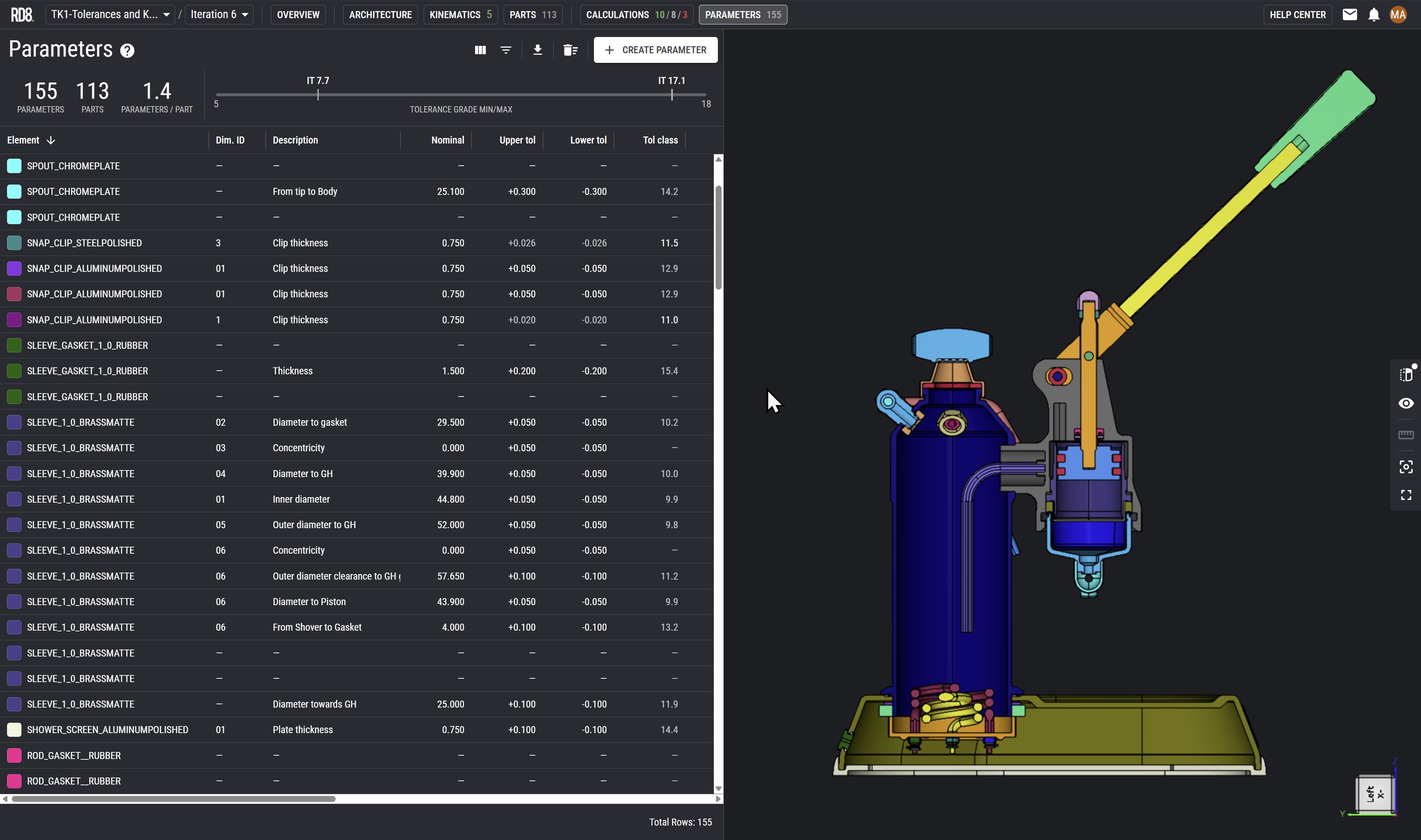
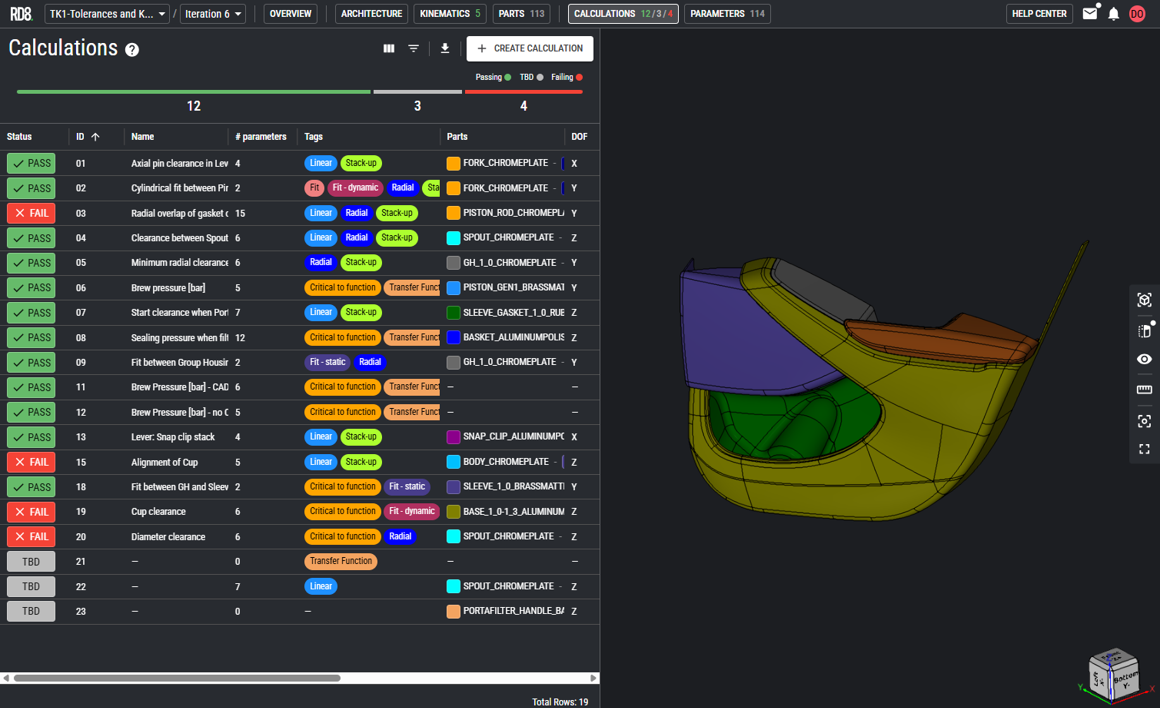
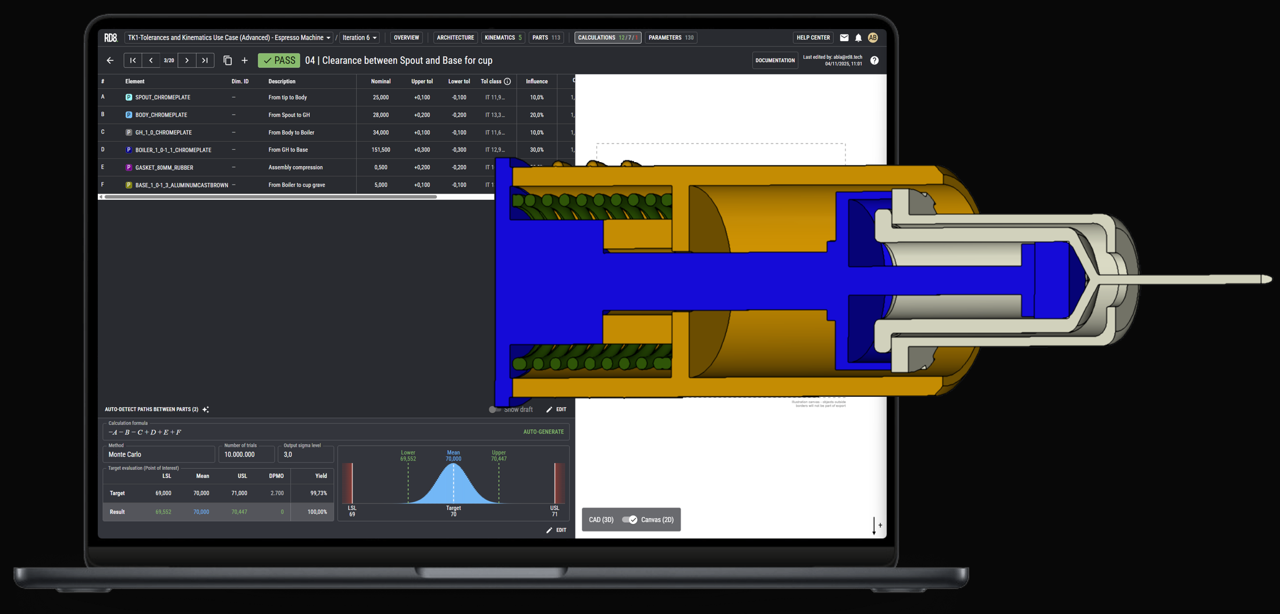
Yes. RD8 provides proprietary tolerance and interface analysis software that operates directly on 3D CAD data to identify interfaces, stack-ups, sensitivities, and improvement potential. The software supports automated tolerance calculations, variation analysis, and live collaboration, enabling teams to improve design quality and reduce trial-and-error during development
Get in touch with our experts
Let's share viewpoints on next level design quality.
Shoot us a message and we will get back as soon as possible.


By submitting, you accept RD8's Privacy Policy and Terms of Service.